All ages
World War II
How did the world descend into its deadliest conflict — and what changed because of it? Trace the path from the aftermath of World War I through the rise of totalitarianism, major battles on every front, the Holocaust, life on the home fronts, and the new world order that emerged from the ruins.
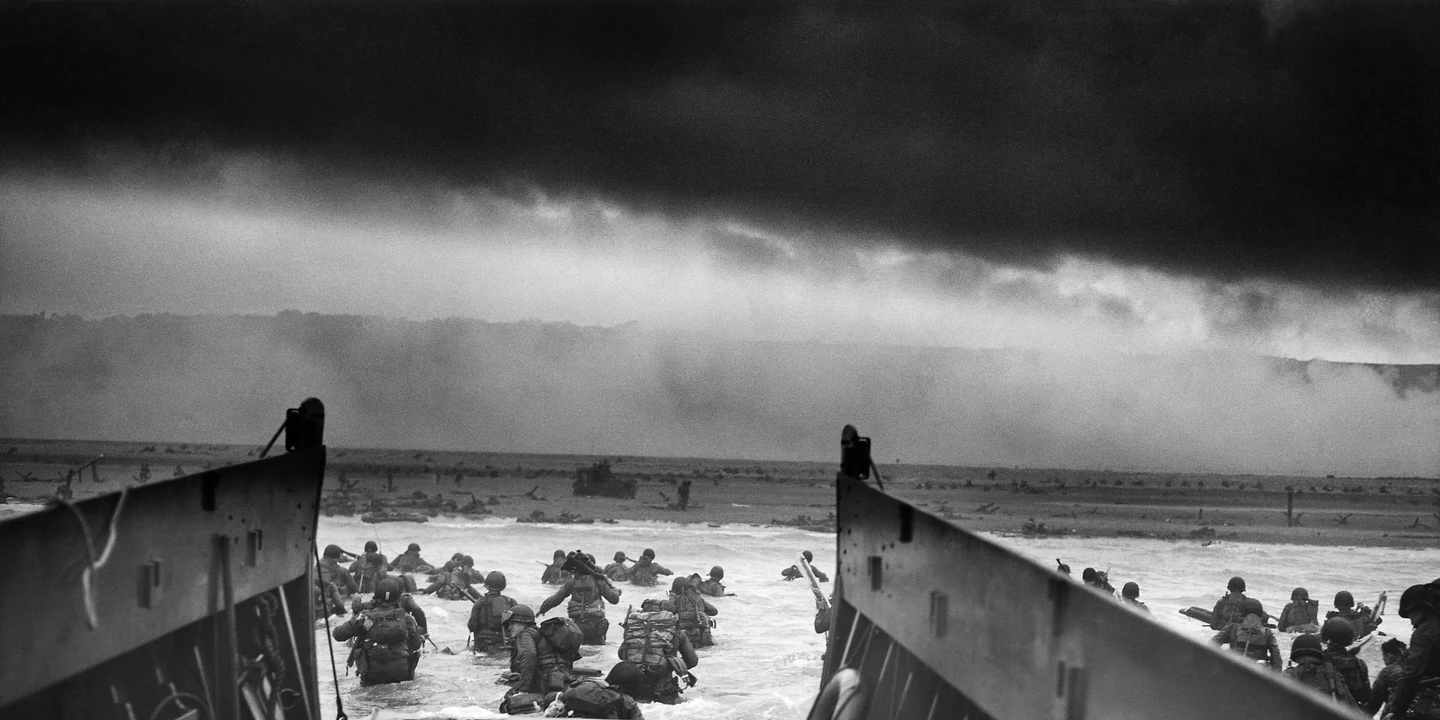
American soldiers wade ashore on Normandy during the D-Day landings, 6 June 1944.
Robert F. Sargent · Public domain
History
- The Great War's Legacy and the Rise of Totalitarianism (1919-1933) Explores how the unresolved consequences of the Great War — the punitive peace of Versailles, economic upheaval, and collective trauma — combined with the rise of totalitarian regimes in Italy, Germany, and the Soviet Union to create the conditions for a second global conflict.
- Japanese Expansion and the Road to War (1931-1939) Explores the rise of militarism in Imperial Japan, its imperial ambitions in East Asia, and the diplomatic failures of the 1930s — Hitler's incremental aggression, the policy of appeasement, and the chain of events that led directly to the outbreak of war in September 1939.
- European Theater — Axis Ascendancy (1939-1942) Covers the period of Axis dominance in Europe — from Germany's lightning conquests in the west through the Battle of Britain, the campaigns in North Africa and the Mediterranean, to the massive Eastern Front and the turning point at Stalingrad.
- The Pacific Theater (1941-1945) Covers the war in the Pacific — from Japan's devastating surprise attack on Pearl Harbor and rapid conquests across Southeast Asia, through the naval turning points at Midway and Guadalcanal, the brutal island-hopping campaign, to the atomic bombings and Japan's surrender.
- Home Fronts, Society, and Total War Examines the war's impact beyond the battlefield — the transformation of national economies into war machines, the changing roles of women and minorities, propaganda and information warfare, technological breakthroughs, and the resistance movements that fought occupation across the globe.
- The Holocaust and Crimes Against Humanity Examines the systematic genocide of six million Jews and millions of other victims — from the ideological roots of Nazi antisemitism through the escalation to industrial mass murder, the camp system, and the stories of resistance, rescue, and survival.
- European Theater — Allied Victory (1943-1945) Covers the Allied campaigns that liberated Europe — the grueling Italian campaign, the D-Day invasion and liberation of France, the massive Soviet offensives on the Eastern Front, and the final defeat of Nazi Germany.
- Aftermath, Legacy, and the Postwar World (1945-1950) Examines the consequences of World War II — the war crimes trials that established new principles of international law, the staggering human cost and reconstruction efforts, the creation of new international institutions, and the dawn of the Cold War that would define the next half-century.
Ready to start learning?
Start for free